African Cultural Heritage: Between Preservation and responsabilisation of an Extroverted Generation

mluemsa Par 0

Dans Translations

Culture


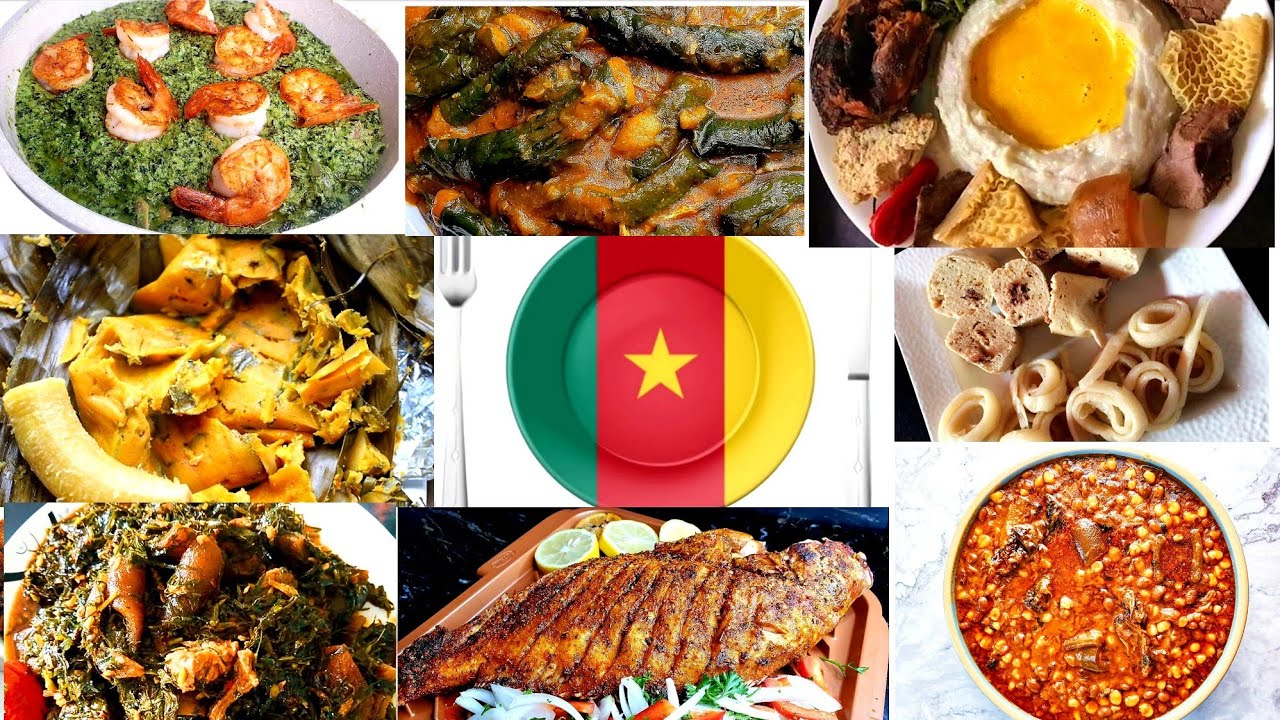
If indeed, each Cameroonian territory is characterized by a gastronomic diversity that is no longer limited to a single region, given that, within the framework of a national unity that is constantly evolving, Cookeries or plates from other regions are more and more prepared by people from other regions, and even from beyond national borders, it is because every territory within a country is defined by its specific dishes which like customs, musical rhythms, and international cultural festivals amongst others, are part of a national cultural heritage that must be preserved. Image: Mary Lobe in Uncategorized/blog.agrifrika.com – August 2025

Analyze/An illustrious Cameroonian songwriter and singer who lived between September 1947 and November 1997 says in "Mbémb'a Mota Sawa," an excerpt from "The Best of Volume 2," that "if you take taro and yellow sauce to a Men from the West, Nyembwè to a Gabonese Makéya, Pondu to a Congolese, and Kepen Ke Bazeu to a Bamois, what will you give them in return, my brother? You have a tie knot as big as a bunch of cabbages, and you threw me in prison for tying my loincloth on the day of the Ngondo, because you don't respect values, my friend."

This demonstrates that a human being, as well as a people, is a custom, a tradition, and above all, a culture which, without one of its many characteristic traits, loses an originality that makes it unique.

If indeed, each Cameroonian territory is characterized by a gastronomic diversity that is no longer limited to a single region, given that, within the framework of a national unity that is constantly evolving, Cookeries or plates from other regions are more and more prepared by people from other regions, and even from beyond national borders, it is because every territory within a country is defined by its specific dishes which like customs, musical rhythms, and international cultural festivals amongst others, are part of a national cultural heritage that must be preserved, because the Perpetuation of these ancestral enlightened practices and respectful of human life, helps maintaining a cultural bond called to evolve over time, without losing its originality which in fact, is the living memory of a history connecting new generations to their ancestors.

There is even a widely known adage in Africa and in Cameroon in particular which say that culture is what remains when we have lost everything. This evocative and expressive phrase prompts us to ask ourselves the following question: What is this everything we have lost, to the point where only our culture remains?

By putting ourselves in a context of colonization marked notably by denigrated and devalued practices, we believe is about our dignity of human being. We say it because the cruelty of that shameful past which belong to a dark chapter of a history we share with our former oppressors, was characterized by a racism that reduced Black people to a subhuman status akin to that of animals.

Imagine that, in addition of the fact of having lost your human dignity after demeaning or depreciating acts, those who have taken it, seek to seize the very last things you possess; that is to say, your culture, your identity or the particularity that make you who you are. We also add, the marks or signs that will allow you not only to easily find your way during a life characterise by diverse influences, but also be or remain in harmony with your ancestors, and your environment. It is clear that in such a situation, you will be very affected, for these are acts of contempt committed by strangers who know nothing about your culture, but did everything in their power, to impose their own which according to them, are more significant, contrary to your own which they deemed stupid or idiot.

It is our history that gives greater meaning to our cultures. Indeed, to enhance the quality of our cultures, we must always keep in mind the past that binds us to our ancestors who are the foundation of what new generations are called upon to value more highly today, while taking care to discard or remove any harmful elements. Image: Harry Hamilton Jonhson COMMONS CREATIVE ATTRIBUTION bell Town Beach

It is this reality that helped shape in the mind of some Africans, the idea of a sub humanity intensified by globalization which is the reality of a world transformed into a "global village," where distances between Territories have been shrunk or shortened, by the constant advancements in science and technology.

And if this ongoing globalisation phenomenon is more pronounced today and characterized by constant shifts in the fields of science, engineering, and technology, it is because like before, it remains the way through which, major powers continue to impose their choices on the rest of the world, to the point of having bring some Africans to have a greater consideration for things from abroad. And the evidences of what we are saying can be seen in our educational systems, among others. Indeed, even if trough films and books which valorise thank to a diversity of writings genres, a continent culturally rich, we have the proof over the years of a growing awareness which allow to better put in value African culture, there is still some way to go, in a globalized context where the most attractive things come from abroad, the most lucrative thing come from abroad, as well as the technical resources needed to optimize the quality of African works and productions.

We are not making these precisions to say that African countries must content themselves solely of what is produced in Africa, but rather to say that, if in everything there is always models for references, African people must take them as source of inspiration, to enhance the quality of what make them unique because, some young people in particular, faced with rapid technological advancement, often mistakenly believe that only what comes from abroad is good, and sometimes without take in consideration a local vast potential that must be more valorise, notably through a set of initiatives that encourage young Africans and Cameroonians in particular, to develop a deeper appreciation for their culture, and especially their history, for it is our history that gives greater meaning to our cultures. Indeed, to enhance the quality of our cultures, we must always keep in mind the past that binds us to our ancestors who are the foundation of what new generations are called upon to value more highly today, while taking care to discard or remove any harmful elements. And it is in this vein that some history teachers, persistently advocate for a history book dedicated solely to Cameroon, not to suggest that what happened out of the continent and Cameroon in particular is detrimental or without importance, but rather to better valorise the history of African peoples and Cameroonians specifically, because if we are proud of the fact of having Africans specialists of Karl Marx, Hegel, Shakespeare, Aristotle, and Victor Hugo among others, we are more proud of the fact of having africans specialists in the field of Witchcraft which is opposed to black magic, Sorciology, post-colonial Négritude, Vodoo, secret societies of Cameroonian peoples, Africans agroforestry systems, and in African and Cameroonian heritage or patrimoine among other things, because a country’s culture is a memory that never dies, provided that it is perpetuated and cherished by successive generations who honour the memory of those who came before them. Hence the gradual reclamation of some of the characteristics features of a local heritage seized during the colonial era by Europeans who, by living in Africa and interacting with some Africans people, realized without admit it that, certain African cultural objects were not only of immense value, but also served as strategic communication tools during times of conflict.

Culture is a memory that never dies, provided that it is perpetuated and cherished by successive generations who honour the memory of those who came before them. Image:copyright unesco fevrier 2026 – August 2025

We recently witnessed the restitution of the *Djidi Ayokwe* which had been seized by the French colonial army not for its beauty or the quality of the sounds it produced, but because they realized it was a strategic means of defence. And this is one of the distinctive features of African cultures. In Cameroon, in particular, there are many peoples or communities within which, communication with tam-tams, drums, and other traditional musical instruments is frequent. If musical language is indeed universal and can be learned by anyone willing to take the time to understand, read, and write it properly, it must be said that, Africans who themselves have their own particular ways of communicating, notably through traditional musical instruments, also use this universal language to better promote their local cultures projects that are increasingly supported financially and technically by former colonial powers. Indeed, if before, with the ambition of expanding colonial empires, every effort had to be made to banish barbaric and foolish cultures, today, with much hindsight or perception after the facts, the former colonial powers have understood that, to better promote their own cultures, they must support the promotion of a set of local cultural heritages that new generations have a duty to better valorise, because today, with the constant advancement of technology, it is more and more easy to feel more European than African, without ever having set foot in Europe, more American than African, without ever having visited the United States of America, or more Chinese than African among other examples, because language is one of the fundamental element of the valorisation of a culture in the world. Hence the importance of learning vernacular languages.

Even though it is not all Africans or all those who consider themselves as such who speak these languages, in addition of the fact that many of these languages have vanished or are at risk of disappearing, given that the number of speakers dwindles or decreases, the new generations have a duty to contribute in their own way, to better promoting these languages, so that more and more young people take an interest in it because, colonization and globalization in particular, have partly contributed to the disappearance of many African languages, as well as to a waning or fading interest of Africans for their own cultures and histories. Hence the necessity to do everything to bring back some of the characteristics features of Africans cultures, in addition of the necessity to continue the teaching of mothers tongues because, if there is nothing bad in the fact of writing, reading and speaking German, Spanish, Portuguese, Chinese, English, and French among others, it is equally important to preserve what makes us unique, even if we must recognise that, to communicate with the rest of the world, and be in communion with other civilizations, we must learn these languages, ​​in addition of the fact of learning to better understand others cultures, even if we know that, some Africans today, take themselves for something they are not, within a globalized context where major powers continue to exert economic, technological, and above all, a cultural influence over developing nations. Indeed, if every Territory gives something in a context of globalize world, those who provide the technical and financial resources in particular, hold the upper hand on others and developing countries in particular, to the point of having bring many young Africans to adopt foreign habits which give the impression that, Africans are more drawn or attracted by what comes from elsewhere.

And even if we would like it to be just an impression, factors such as wars, conflicts, poverty, corruption, poor governance, and the precariousness of unemployment among others, swiftly dispel that impression, to give way to the reality of an extraversion which is the consequence of a combination of economic, socio-political, cultural, environmental, and above all, technological factors.

International relations experts often say that in the global arena, nothing is given to those who have not given something, or who do not have something to give. As to say that, international relations have nothing to do with charity. Indeed, even acts of charity often aim to achieve various geopolitical and geostrategic objectives which contribute to further increase the dream of a wondrous chivalrous elsewhere, to the point where many are those who often ask themselves if there is not African models in every field. But even if they are numerous, many Africans remain more drawn to what comes from that highly alluring or attractive elsewhere which continues to attract crowds to Territories now overwhelmed by waves of illegal immigration that have become unsustainable, and which are in one way or another, a consequence of this extraversion which bring  some Africans whether in the diaspora or not, to formally establish vocational and skills-training schools in Africa, in addition of the creation of businesses or job opportunities, despite the fact that people are increasingly tempted to seek a better life elsewhere.

We are then in a situation where faced with the inevitable cultural shock of globalization characterized notably by the strong attraction of abroad opportunities, Africans must redouble their efforts for the better valorisation of their heritage. They must encourage especially the youth, to become more aware of their role in preserving and promoting a cultural legacy of immense importance to their peoples and nations. Furthermore, leaders must continue collaborating with international partners, to ensure the restitution of what was unjustly taken from African peoples because, one of the best ways to honour the memory of ancestors, is to adopt resolutions that heal the wounds of the past, and guarantee fraternal relations that respect the dignity of every human being.

And if it is good to demand the return of what belongs to us, it is even better to optimize measures that encourage young people to better take care and valorise their culture which is a heritage transmitted to them by their elders, in a context of globalization where cultures travel more rapidly through new information and communication technologies.
With the constant advancement of technology, it is more and more easy to feel more European than African, without ever having set foot in Europe, more American than African, without ever having visited the United States of America, or more Chinese than African among other examples Image: pixabay/tungnguyen0905/April 2022

Young Africans therefore have a heritage to preserve and further value, despite the multiple influences which, far from distancing them from who they truly are, should instead lead them to live in harmony with others and other cultures, while preserving their heritage because culture is a sum of historical beliefs and practices that define the uniqueness of each people, and must always be transmitted from generation to generation, so that its memory does not disappear or be lost over time, especially in a context where the proliferation of exchanges fostered by globalization, exerts a powerful attraction on civilizations less advanced economically, technologically, and scientifically. Hence the importance of the decision to make everything to repatriate some of the African cultural heritage because, beyond restitution or these highly symbolic acts, we must also see it as a way for African leaders to bring youth to take a greater interest in their history and culture in particular, so that they always remember who they are, regardless of the country or continent where they are destined to thrive or realise themselves. It would also be beneficial to review history curricula in African schools, because there are many aspects of their history that Africans are unaware of. And when we know that history is to culture what the soul is for the body, we understand the need not only to preserve our heritage, but also to make further efforts so that young people take a greater interest in the history of their country, their peoples, and their cultures which make the uniqueness of each people. Indeed, before becoming a citizen, a person is first and foremost belong to a culture destined to serve a nation. The past is then not merely a collection of prior events that shaped who we are. It is also a set of present actions that can offend a past who can express its displeasure toward a generation who do not honour the memory of his ancestors. Hence the need to prioritize traditional African values ​​over all others, not to exclude or condemn other values, but in order to remain who we are despite everything; that is to say, a people, a history, a tradition, and a culture which is an heritage which must be preserved and cleansed of all negative influences, because she is the root that allow people to always keep in their mind who they are, in a context of globalization that exerts a powerful social allure or attraction.

English|French

Ajouter un commentaire

Anti-spam